


Why Continuous Manufacturing Is Transforming RNA Production
RNA therapeutics are transforming drug development, creating new opportunities across vaccines, oncology, rare diseases and infectious diseases. However, as more RNA programmes progress towards the clinic, manufacturers face growing challenges around quality, consistency and scale.
In this article, Greg Seed, Head of mRNA at Arcinova, explains how flow-based manufacturing is helping address these challenges and shaping the future of RNA production.
RNA therapeutics have been everywhere in recent years. What’s driving the momentum?
RNA has had a transformative impact on drug development, particularly since COVID-19. The rapid development of mRNA vaccines demonstrated how quickly therapies can be advanced when the platform is established. Since then, interest has expanded beyond vaccines into areas including oncology, rare diseases and infectious diseases.
What makes RNA manufacturing so challenging?
One of the biggest challenges is that RNA is inherently unstable. It’s prone to degradation and fragmentation, and even small changes during manufacture can affect the quality of the final product. You’re not just making a molecule, you're creating a complex strand that needs to remain intact throughout the process. If the strand starts to fragment, you lose integrity, and that can impact both efficacy and safety.
Purity is another big consideration. During transcription, the process used to make RNA from a DNA template, you don’t just get your target RNA, you also generate get impurities and by-products. So, you need robust purification, along with a clear understanding of what’s happening to your molecule at every step.
Traditionally, this has been done using batch processes, what are the limitations?
With batch processing there are multiple manual steps, handoffs, and interventions. Each time material is transferred or handled, there’s an opportunity for contamination, variability, or simple human error. And with something as sensitive as RNA, those risks are amplified.
Another challenge is visibility. In a batch process, you’re often waiting until quality control testing is complete to find our whether everything has worked as intended. If something’s gone wrong, you only find out after the fact. Whereas for continuous, flow-based IVT (in vitro transcription), you have in process monitoring.
So where does flow-based manufacturing come in?
Instead of running separate batches, flow manufacturing operates as a controlled, closed system. In a flow-based system, the key inputs, including template DNA, nucleotides, enzymes and buffers, are continuously fed into a closed process operating under defined parameters. The system then runs automatically with minimal intervention. Because the system is closed and automated:
- There’s significantly less manual handling
- The risk of contamination is reduced
- Process consistency improves
- Variability between runs can be minimised
And crucially, you’re no longer repeatedly stopping and starting the process, which helps protect maintain RNA integrity throughout production.
One of the big advantages with flow is real-time monitoring, what does that actually mean in practice?
In a traditional batch process, you make your RNA strand, send samples for QC testing, and wait for the results. That’s often your first indication of whether the process worked.
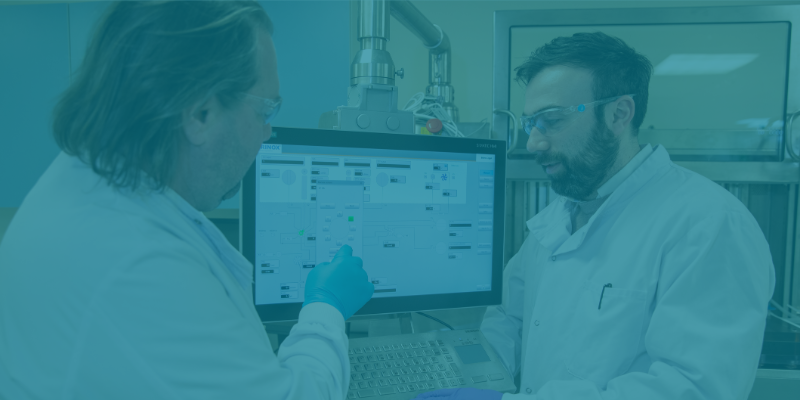
"With flow systems, you can monitor parameters like pressure and UV absorption while production is taking place. You can actually see purity improving, impurities decreasing, and understand how the system is behaving in real time."
It doesn’t replace QC or GMP release testing, those remain essential, but it does provide a much earlier indication that everything is moving in the right direction. And if something isn’t quite right, you have the opportunity to investigate and respond far sooner.
Once you’ve produced the RNA, what challenges come next?
Producing RNA is only part of the story. The crude drug substance must then undergo purification, concentration and formulation to create the final drug product. Each step introduces additional complexity and can affect yield, quality and stability. Because RNA is highly sensitive, manufacturers must carefully manage storage conditions, hold times and freeze-thaw cycles to preserve product integrity throughout development.
What does this evolution from batch to flow mean for developers?
At a high level, the move to flow is about reducing risk and improving control. With the right approach, you can achieve:
- Higher quality RNA with improved integrity
- More consistent, and reproducible manufacturing processes
- Earlier process insights and greater confidence before you reach key decision points
- A smoother transition from development into clinical manufacture
Of course, the technology alone isn't enough. Successful implementation also requires the right infrastructure and expertise to make it work in practice. But across the industry, we're increasingly seeing a shift towards continuous, flow-based IVT, and it's shaping the future of RNA manufacturing.
And where does Arcinova fit into this changing landscape?
As RNA therapeutics continue to advance, developers are increasingly looking for integrated capabilities that span the entire journey from drug substance to drug product.
"At Arcinova, that’s very much how we approach both small molecules and RNA programmes. Bringing together process development, analytical expertise, and sterile GMP manufacturing under one roof, we can help reduce complexity and minimise risk throughout development."
It also allows for a more seamless transition between stages, which is particularly important for RNA where stability, quality, and timelines are all closely linked.
Ultimately, innovation in RNA therapeutics depends not only on the science itself, but also on the ability to manufacture these molecules reliably and at scale. That's why the shift from batch to flow represents such an important step forward.
Looking Ahead: The Future of RNA Manufacturing
The transition from batch to flow is helping reshape RNA manufacturing by improving process control, reducing variability and providing greater confidence in product quality. As more RNA therapies move towards clinical and commercial development, continuous processing is likely to become an increasingly important part of the manufacturing landscape.
Interested in discussing your RNA manufacturing requirements? Contact the Arcinova team here to learn how our integrated process development, analytical and GMP manufacturing capabilities can support your next RNA programme, from early development through to clinical supply.